

Electric vehicles demand motors that are powerful, efficient, and lightweight. Traditional manufacturing methods often create components that are too heavy and complex, limiting vehicle range and performance, a major engineering roadblock.
The future is high-tech aluminum die casting. This process is essential for producing lightweight motor housings with integrated cooling and complex features at a massive scale, directly enabling the next generation of more powerful and efficient electric vehicles.
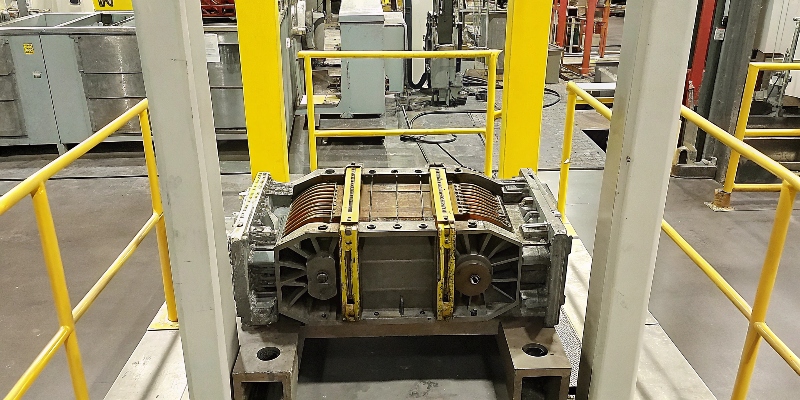
Over my 20-year career, I’ve seen a massive shift in the parts we produce. We went from casting relatively simple components for internal combustion engines to making incredibly complex, mission-critical housings for electric vehicle powertrains. The conversations I have now with Tier 1 and OEM engineers are completely different. Before, the focus was mainly on cost and basic dimensional accuracy. Now, we talk about thermal conductivity1, structural rigidity2, pressure tightness, and how to remove every last gram of weight. The EV motor housing is a perfect example of this evolution. It’s not just a container; it’s a high-performance system, and die casting is the key technology making it possible.
How Will Lightweight Materials Shape Future Motor Housings?
Heavy motors reduce EV range and make the car less agile. In the competitive EV market, every single gram of weight counts against performance, forcing engineers to find lighter solutions.
The future is dominated by advanced aluminum alloys specifically designed for die casting. These materials provide the required strength and durability while significantly reducing weight, which directly translates to longer range and better handling for the vehicle.
The primary driver for using aluminum is its excellent strength-to-weight ratio. The goal is to make the housing as light as possible without compromising its structural integrity. The housing is a critical part of the powertrain structure; it has to maintain perfect alignment for the rotor and stator under extreme torque loads and road vibrations. We are moving beyond standard aluminum alloys to more specialized formulations, often with magnesium or other elements, that offer even better properties. At EMP Tech, a large part of our DFM (Design for Manufacturability) analysis involves using advanced simulation to optimize the housing’s design. We can create thin walls, typically around 3.0mm, and add strengthening ribs only where they are needed. This data-driven approach allows us to remove unnecessary material and deliver a housing that is both incredibly strong and impressively light, meeting the ever-increasing demands from our OEM customers.
Why Is Integrated Cooling the Next Big Thing for EV Motors?
EV motors generate a massive amount of heat, especially during fast charging or high-performance driving. If this heat isn’t managed, motor performance degrades rapidly, and you risk permanent damage to the components.
The future is integrated liquid cooling channels cast directly into the housing. This design is vastly more efficient at dissipating heat than legacy methods, allowing for motors with higher power density—more power in a smaller, lighter package.
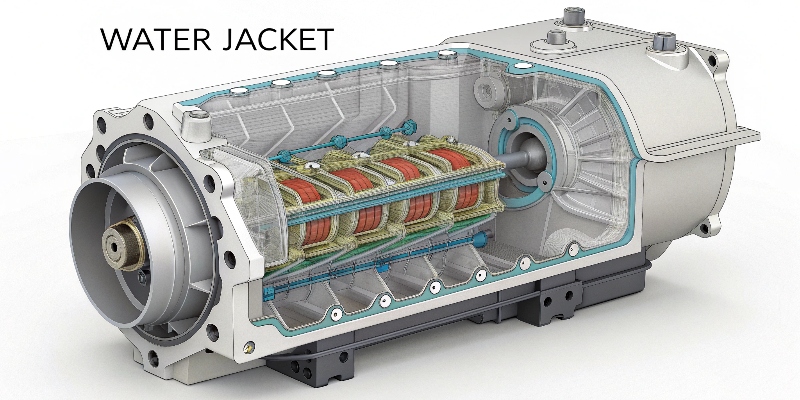
As engineers push for more powerful motors in smaller spaces, thermal management3 becomes the single biggest challenge. In the past, you might have seen a separate, bolted-on cooling plate. This approach is inefficient because the interface between the two parts creates thermal resistance, slowing down heat transfer. The future—and what we are already doing today—is casting the cooling channels, often called a "water jacket," directly into the housing structure. Molten aluminum flows around complex steel cores inside the die, creating a network of leak-proof channels. Coolant flows through these channels, absorbing heat directly from the stator. This level of integration is a manufacturing marvel that is only possible with advanced high-pressure die casting. It allows our customers to extract the maximum possible performance from their motor design and is a key enabler for the next generation of high-performance EVs4.
How Does Vacuum Die Casting Prevent Defects in Motor Housings?
Hidden gas bubbles, or porosity, inside a casting are a catastrophic defect. For a motor housing, this can lead to coolant leaks, reduce structural strength, and make the part impossible to weld or heat-treat.
Vacuum die casting removes air from the mold just before an injection, drastically reducing gas porosity. This creates denser, stronger parts that are pressure-tight, weldable, and suitable for heat treatment, meeting the highest OEM quality standards.
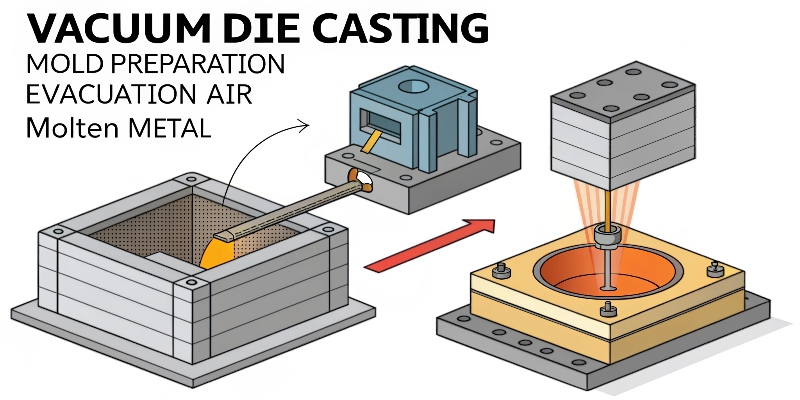
Standard die casting traps small amounts of air in the molten metal, which creates porosity. While this might be acceptable for some parts, it’s a non-starter for a high-performance motor housing. This is why the future of this application relies on advanced processes like vacuum die casting. Just milliseconds before we inject the molten aluminum, a powerful vacuum system evacuates nearly all the air from the mold cavity. With no air to trap, the metal fills the mold in a much calmer, less turbulent way, resulting in a part that is incredibly dense and virtually free of gas porosity. This is a game-changer. It means the intricate cooling channels will be leak-proof. It means the housing can be welded to other components if needed. And importantly, it means the part can be T6 heat-treated to achieve its maximum possible strength, a process that would cause a standard die casting to blister and deform.
Why Are Advanced Coatings Essential for Modern EV Motor Housings?
A motor housing is constantly exposed to road salt, water, and debris. Without proper protection, corrosion can degrade the aluminum over time, potentially compromising the seal and causing catastrophic failure of the electronics inside.
The future of surface treatments will provide a multi-layer defense against corrosion and can add functions like electrical insulation. A system of conversion coating plus a durable e-coat is the standard for ensuring lifetime durability in harsh automotive environments.
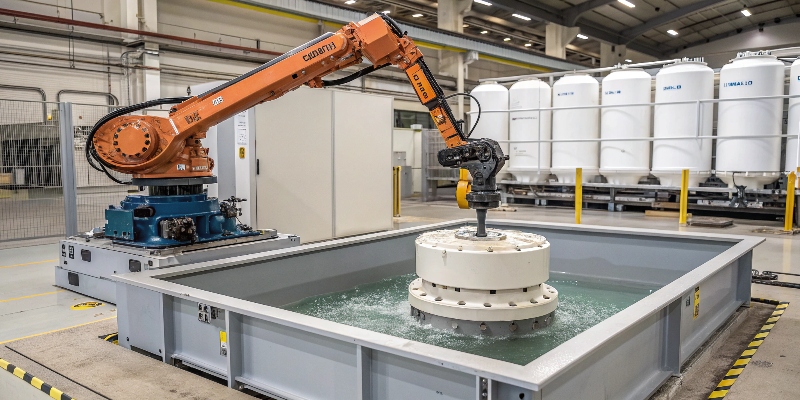
When a Supplier Quality Engineer from one of our clients audits our facility, one of the first things they check is our surface treatment process. The durability requirements are incredibly strict, often demanding that the part survive over 1,000 hours of continuous salt spray testing without any sign of corrosion. To meet this, a robust, multi-layer coating system is essential. The process starts with a thorough cleaning and pre-treatment, which creates a conversion coating on the aluminum surface. This microscopic layer provides its own corrosion resistance and, more importantly, ensures the topcoat will have excellent adhesion. The topcoat is typically an e-coat (electro-deposition coating). The housing is submerged in a paint bath and an electrical charge is applied, which causes the paint to deposit a perfectly uniform layer over every single surface, inside and out. This combination provides a tough, durable finish that seals the aluminum away from the elements and ensures the housing will outlast the vehicle itself.
How Will Sustainability Impact the Future of Motor Housing Production?
The entire promise of EVs is built on sustainability. This puts enormous pressure on the entire supply chain to reduce its environmental impact, from raw materials to final manufacturing processes.
Sustainability will drive the increased use of recycled, "low-carbon" aluminum. Because aluminum is infinitely recyclable without losing its properties, die casting will be a central part of the automotive industry’s move toward a circular economy.
This is a topic that comes up frequently in discussions with procurement directors. They are not just evaluating us on technical capability and price anymore; our environmental credentials are also under scrutiny. The good news is that die casting is inherently well-suited for a sustainable future. Aluminum is one of the most recycled materials on the planet. Creating a part from recycled aluminum5 uses about 95% less energy than making it from primary ore. We are already seeing a huge push from OEMs to use secondary alloys made from recycled content. At our own facility, we practice this every day. All of our process scrap—the runners, biscuits, and overflows—is collected, re-melted, and put right back into the process. This closed-loop system minimizes waste and energy consumption6. As the industry moves forward, demonstrating this commitment to recycling and a low-carbon footprint will become just as important as the quality of the part itself.
How Is Global OEM Adoption Changing the Industry?
As every major automaker in the world shifts to electric platforms, they are all converging on similar solutions. This is creating a set of unwritten industry standards for performance, quality, and manufacturing processes.
Global OEMs are overwhelmingly adopting die-cast aluminum for motor housings, making it the de facto industry standard. This is driving rapid innovation in alloy development, casting technology, and quality assurance to meet globally recognized automotive requirements.
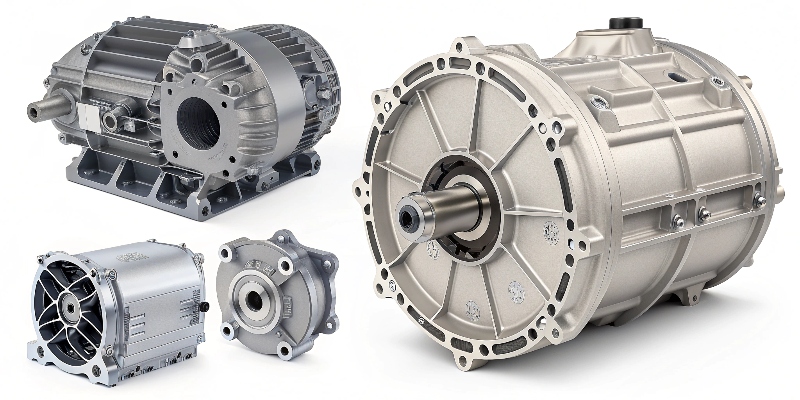
When I work with engineers from Germany, the United States, or Japan, I see them all facing the same challenges and arriving at the same solution for motor housings: die-cast aluminum. While the specific designs vary, the core requirements for lightweighting, thermal management, and structural integration are universal. This global adoption is creating a powerful feedback loop that is accelerating innovation across the entire industry. As a key supplier, EMP Tech is deeply embedded in this process. We have to be compliant with international automotive standards like IATF 16949. We have to provide extensive documentation like PPAP (Production Part Approval Process). This global convergence means that the advanced vacuum casting and sealing technologies we develop for one customer often become the baseline expectation for the next. It’s a challenging environment, but it ensures that the entire industry is pushing forward together to create better, more efficient, and more reliable electric vehicles for everyone.
Conclusion
The future of EV motor housings is inseparable from the future of die casting. This technology is the key enabler for creating the lightweight, thermally efficient, and complex components that next-generation electric vehicles demand.
Understand the importance of thermal conductivity in enhancing the efficiency of electric vehicle motors. ↩
Find out how structural rigidity contributes to the safety and performance of electric vehicle components. ↩
Discover the critical challenges of thermal management and how they impact EV performance. ↩
Learn about the characteristics that make electric vehicles high-performance and competitive in the market. ↩
Explore the environmental advantages of using recycled aluminum in the production of EV components. ↩
Explore how die casting techniques can lead to significant energy savings in the production process. ↩


