

The shift to electric vehicles demands a whole new approach to manufacturing. Old methods are often too heavy, slow, and expensive, making it hard to stay competitive in this fast-paced market.
Electric aluminum die casting is revolutionizing OEM manufacturing by enabling the mass production of lightweight, highly integrated, and thermally efficient components. This process is essential for meeting the unique structural, performance, and sustainability demands of modern electric vehicles.
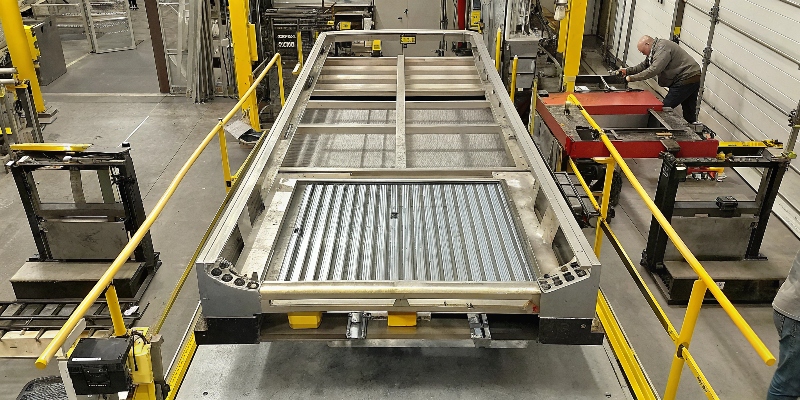
For over two decades, I’ve worked side-by-side with global Tier 1 suppliers and OEMs. I’ve watched the industry’s focus shift dramatically from optimizing internal combustion engines to mastering the art of the electric vehicle. The challenges are completely different. Suddenly, weight isn’t just about fuel economy; it’s about a vehicle’s fundamental driving range. Heat isn’t just a byproduct; it’s a critical factor limiting battery and motor performance. My team and I are at the center of this transformation, using aluminum die casting1 to solve these new, complex problems for our customers every day. It’s more than just a process; it’s a key enabler of the electric future.
Why is Lightweighting Now the Top Priority for OEMs?
Your EV project has an aggressive range target. Every component is under review for weight, because heavier parts mean a bigger, more expensive battery and a disappointed customer who won’t get a long enough range.
Lightweighting is the first priority because it directly extends an electric vehicle’s driving range and improves its handling. Aluminum die casting is a key strategy for OEMs, allowing them to replace heavy steel fabrications with strong, lightweight aluminum parts without compromising safety.
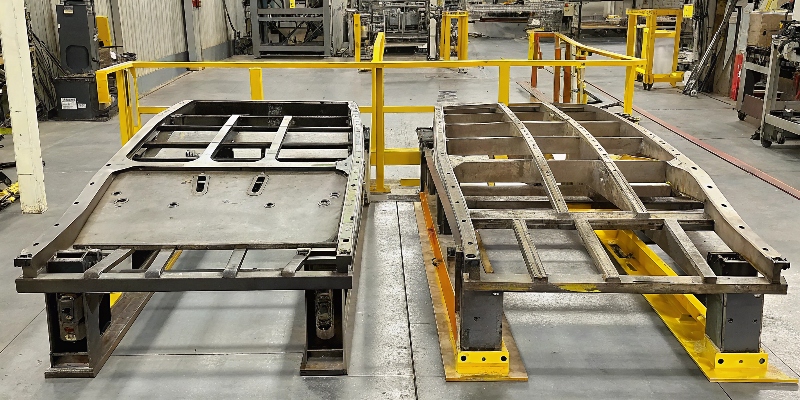
The equation is simple: less weight equals more range. This is the mantra I hear from every single OEM and Tier 1 customer I work with, especially those in the competitive German market. For them, range is not just a feature; it is the main selling point. Aluminum is about one-third the density of steel, so the potential for weight savings is huge. But it’s not just about swapping materials. The beauty of die casting is that it allows for highly optimized designs. We can create hollow sections, add reinforcing ribs only where they are needed, and vary wall thicknesses to create what we call a "topology-optimized" part. I worked on a project to convert a multi-piece steel structural node to a single aluminum casting. We cut the weight of that one assembly by 45%. The OEM calculated that this change alone added about 8 kilometers to the vehicle’s range. That is a massive return on investment.
How Are OEMs Using Die Casting for Greater Integration?
Your new vehicle design has hundreds of individual brackets, mounts, and supports. This high part count increases assembly time, creates potential failure points, and makes the supply chain incredibly complex to manage.
OEMs are using large-tonnage aluminum die casting to combine multiple separate parts into a single, highly integrated component. This "mega-casting" approach reduces weight, lowers assembly costs, simplifies logistics, and improves the overall structural integrity of the vehicle.
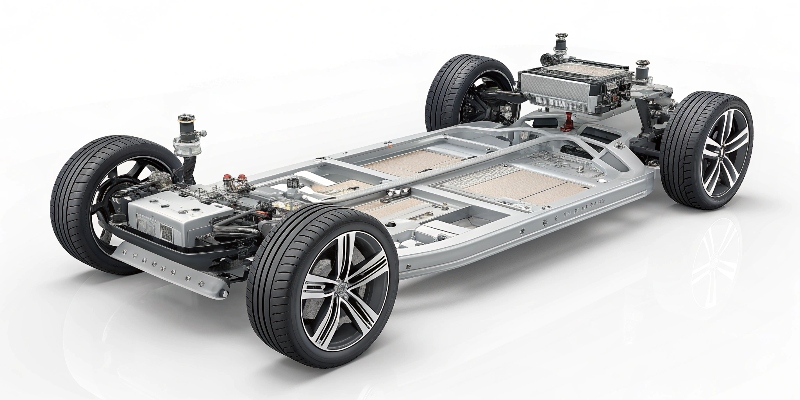
The trend toward part integration is one of the most exciting developments in automotive manufacturing. Instead of stamping, welding, and bolting together 50 different pieces of steel to make a rear subframe, OEMs now want to cast it as one single piece of aluminum. These "mega-castings" are changing everything. My team has been deeply involved in the development of these large structural parts. Using die casting, we can design a single component that includes shock towers, motor mounts, suspension pickup points, and cable routing channels. This is an enormous challenge from a tooling and process control perspective, but the benefits are undeniable. For the OEM, it means fewer suppliers to manage, a much simpler and faster assembly process on the factory floor, and a final structure that is often stiffer and stronger than the multi-piece assembly it replaces. It is a fundamental shift in vehicle architecture2, all made possible by advances in aluminum die casting.
How Does Aluminum Die Casting Help Manage EV Heat?
Your electric drivetrain’s battery, motor, and power electronics all generate significant heat. If this heat isn’t managed, performance will suffer, and you risk a thermal runaway event, which is a major safety concern.
Aluminum is an excellent thermal conductor, and the die casting process allows OEMs to design housings with integrated cooling features. This creates components that act as both a structural enclosure and an active part of the vehicle’s thermal management system.
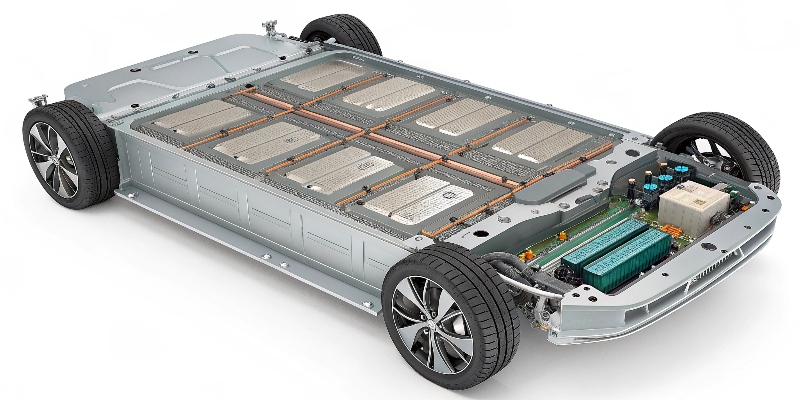
In an EV, managing heat is just as important as managing weight. The battery, inverter, and motor all operate within a narrow optimal temperature range. Go outside that range, and you lose efficiency and risk permanent damage. This is where aluminum’s natural thermal conductivity becomes a critical advantage. I spend much of my time reviewing designs for motor controllers, on-board chargers, and battery enclosures. The common thread is that they are no longer just simple boxes. We work with our customers to cast incredibly complex liquid cooling channels directly into the walls and baseplates of these housings. This allows coolant to flow through the structure, pulling heat directly away from the hottest electronic components. It is a highly efficient and compact way to manage temperature. This level of thermal integration is simply not possible with a stamped steel assembly. It is a perfect example of how the material and the manufacturing process work together to solve a core EV engineering challenge.
Why is Recyclability So Important to OEM Supply Chains?
OEMs face intense pressure from regulators and consumers to build sustainable products. Choosing materials that are difficult to recycle undermines the environmental promise of EVs and creates long-term supply chain risks and costs.
Aluminum is infinitely recyclable without losing its high-performance properties. Using recycled aluminum requires only 5% of the energy needed for new production, which helps OEMs meet sustainability targets, reduce their carbon footprint, and create a secure, a circular supply chain.
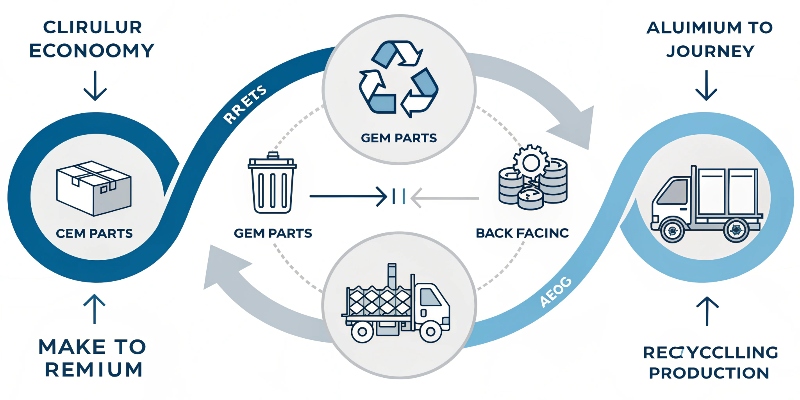
Sustainability is no longer a "nice-to-have" feature; it is a core business requirement for every global OEM. Purchasing directors and quality engineers are now tasked with auditing their entire supply chain’s environmental impact. Aluminum is a clear winner in this area. It is one of the most recycled materials on the planet. I often explain to customers that the aluminum in today’s car will likely be part of another high-performance component in 20 years. This concept of a "circular economy" is very powerful. The energy savings are massive—recycling aluminum saves about 95% of the energy versus making it from raw bauxite ore. At EMP Tech, we have a closed-loop system in our own facility. All scrap, from runners to trimmed flash, is immediately re-melted and reused. This reduces waste and lowers costs. For an OEM, specifying die-cast aluminum is a safe choice that aligns perfectly with their corporate sustainability goals.
Can Die Casting Meet the Cost and Volume Demands of OEMs?
OEMs need to produce hundreds of thousands of vehicles per year. You need a manufacturing process that can deliver high-quality, identical parts repeatably, reliably, and at a competitive price point that makes the final vehicle affordable.
Yes, high-pressure die casting is designed for mass production. While initial tooling is an investment, the fast cycle times, high automation, and low labor costs result in a very low piece price at high volumes, meeting OEM cost and efficiency targets.
When a purchasing director looks at a tooling quote for a complex die casting, there can be some initial sticker shock. My job is to walk them through the total cost calculation. That hardened steel tool is an investment that will produce hundreds of thousands of parts. Once it’s running in one of our automated cells, a robot can pull out a new, complex part every 90 seconds. The process is incredibly fast and repeatable. When you divide that initial tooling cost over a production run of 250,000 units, it becomes a very small fraction of the final piece price. The low labor input and high production speed make it one of the most efficient ways to manufacture complex metal parts at scale. For the types of volumes that automotive OEMs require, there is often no other process that can compete on a ‘landed cost’ basis, especially when you factor in the benefits of reduced assembly labor downstream due to part integration.
How Widespread is the OEM Adoption of This Technology?
You are considering die casting for a new project, but you need to be sure it is a proven, reliable, and globally accepted manufacturing solution. Investing in a niche technology is a risk you cannot afford.
The adoption of electric aluminum die casting is a global, industry-wide transformation. Major OEMs in North America, Europe, and Asia are all investing heavily in this technology for their new EV platforms, making it a mainstream and de-risked manufacturing strategy.
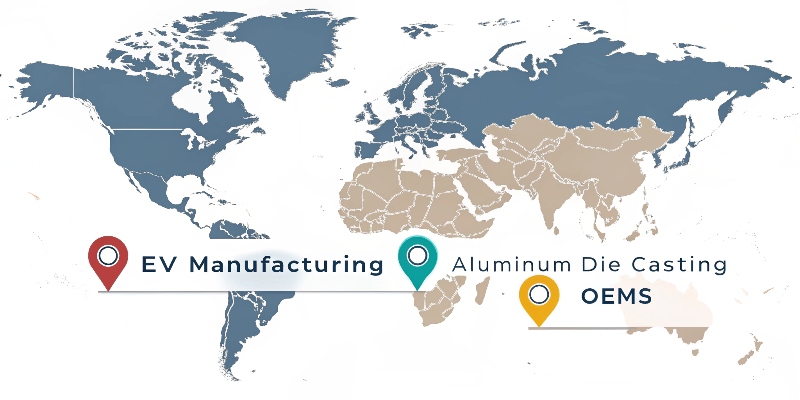
This is not a future trend; it is happening right now. From my perspective serving customers in Germany, Italy, Canada, and the US, the shift is universal. Every major OEM has either already launched or is currently developing an EV platform that relies heavily on large aluminum die castings for its core structure. These are not small, experimental programs. They represent billions of dollars in investment and are the future of these companies. The supply chain is racing to keep up, with massive investments in large-tonnage die casting machines and advanced tooling capabilities. For a procurement professional or a quality engineer, this widespread adoption is a crucial sign of confidence. It means the technology is proven, the quality standards are well-understood, and there is a robust global ecosystem of suppliers. Choosing aluminum die casting is no longer a bold move; it is the industry standard for modern EV design.
Conclusion
Electric aluminum die casting is the key to making EVs lighter, more integrated, and efficient. OEMs worldwide have adopted it to meet the new demands of electrification and sustainable mass production.


